Laboratory Scale Electrodialysis Device
Electrodialysis Device for testing
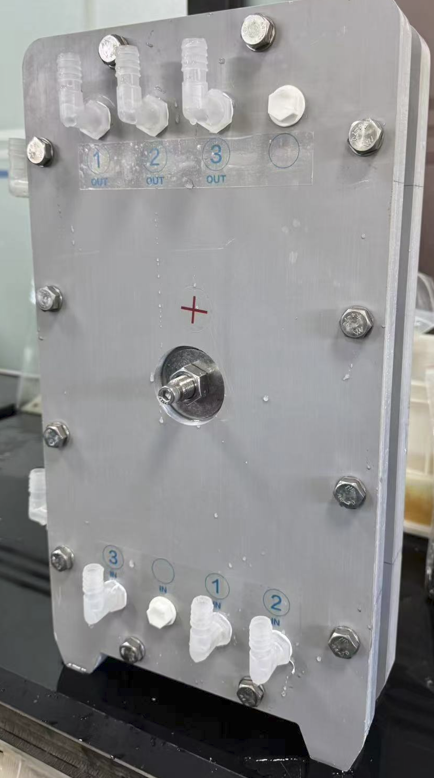
We provide the small Electrodialysis Device, it can be 3 chambers or 2 chambers, such as BPM+CEM+AEM or BPM+CEM or BPM+AEM or CEM+AEM, the membrane size is 40*20cm per piece.
Specifications
Type |
4020 |
Pairs of the membrane (cells) |
10 or 20 or more cells |
Working voltage (DC) |
according to the cells |
Working current (DC) |
according to the cells |
Operating temperature |
5-40 Celsius Degree |
Power supply |
220V 50HZ |
Working Pressure |
<0.07MPa |
Working Principle
The bipolar membrane is a layered membrane with a cation exchange layer on one side and an anion exchange layer on the other side. The junction between the cation exchange layer and the anion exchange layer is a water layer. It is split into H+ and OH- and passes through the cation exchange layer and the anion exchange layer respectively. Bipolar membranes are the key components of bipolar membrane electrodialysers (BPED). BPED is an electrodialysis device that uses bipolar membranes to dissociate water and the selective permeability of anion and cation exchange membranes to convert salts into acids and bases.
Applications
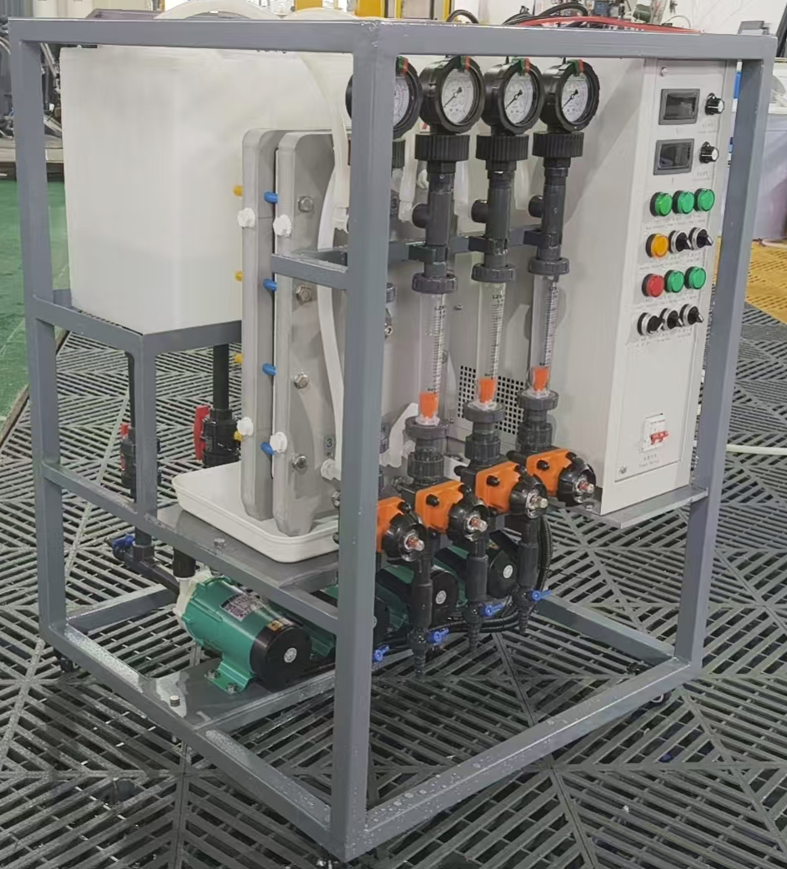
The laboratory device is intended to be operated in a batch process when the solution
passes the cell multiple times with a certain flow rate until it is processed to the desired extent.
These cells can also be used for engineering the conditions of continuous operation.
Typical application areas might be in the:
Desalination of salt water,
Convert the salt into base and acid,
Whey demineralisation,
Production of Organic Acids,
Production of Organic Alkail,
Recovery of Lithium,
Laboratory Electrodialysis Cells
Transportation
We will choose the suitable transportation mode and deliver the goods to you on time and safety